Engineering is most of what I do — but not all of me. A few things I make when there isn't a deadline:
something. →
Hi! I design the mechanical & electrical guts of autonomous robotics, automotive projects, adaptive devices, and creative technology. Happiest while tinkering with my hands or eating a sweet treat.
Engineering is most of what I do — but not all of me. A few things I make when there isn't a deadline:
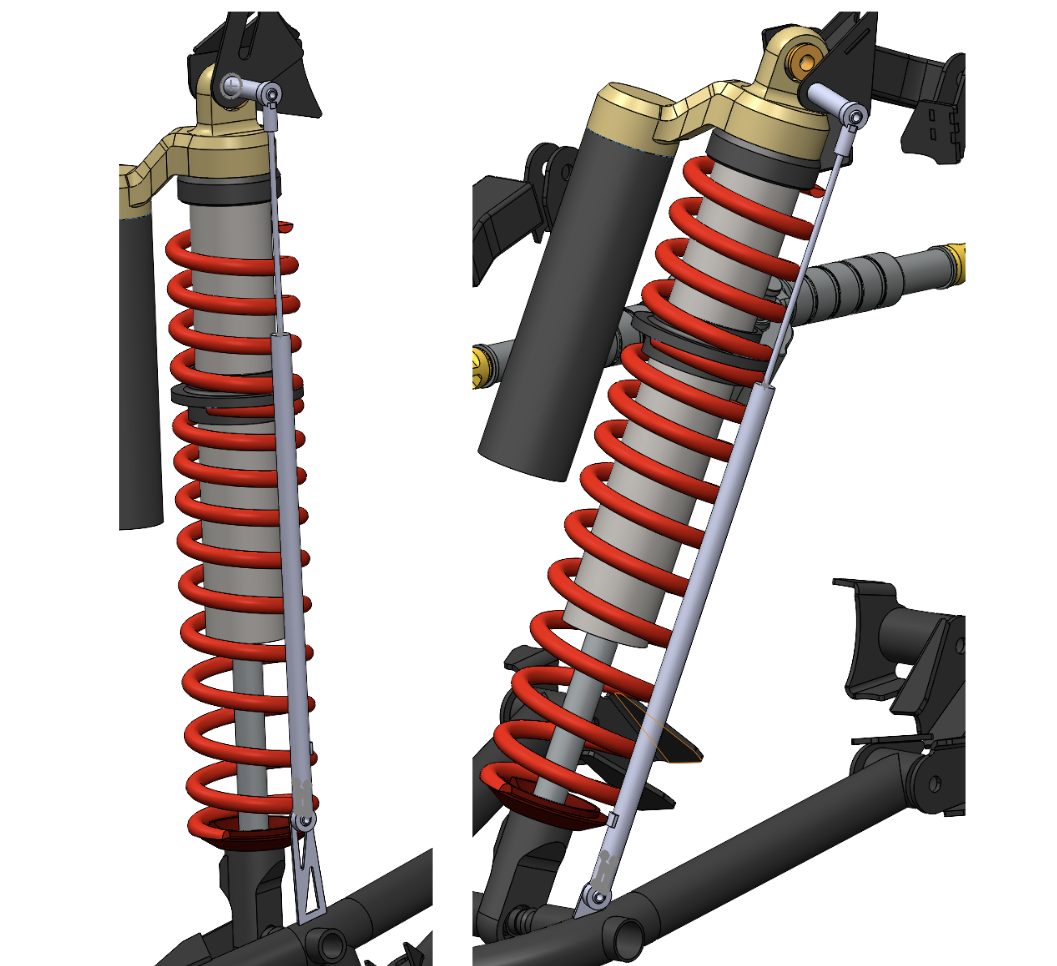
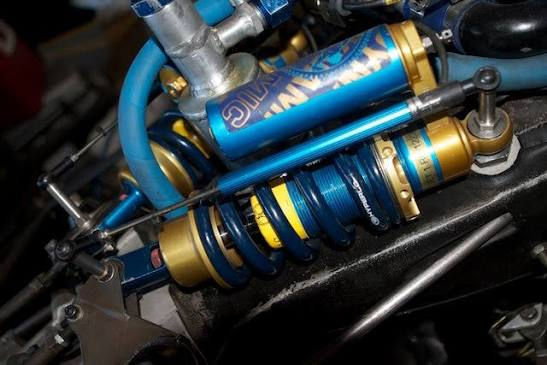
Designed and manufactured waterjet-cut mounting hardware to integrate linear potentiometers into the Baja SAE suspension system for shock travel data acquisition. Enabled reliable suspension travel measurement under off-road vibration and debris exposure.
Our 2025 competition Baja car, Mochi, requires accurate shock travel data for suspension tuning and validation. Off-the-shelf mounting solutions were unsuitable due to tight packaging, suspension geometry, and high vibration. Sensor alignment, durability, and serviceability were critical to prevent sensor damage or noisy data.
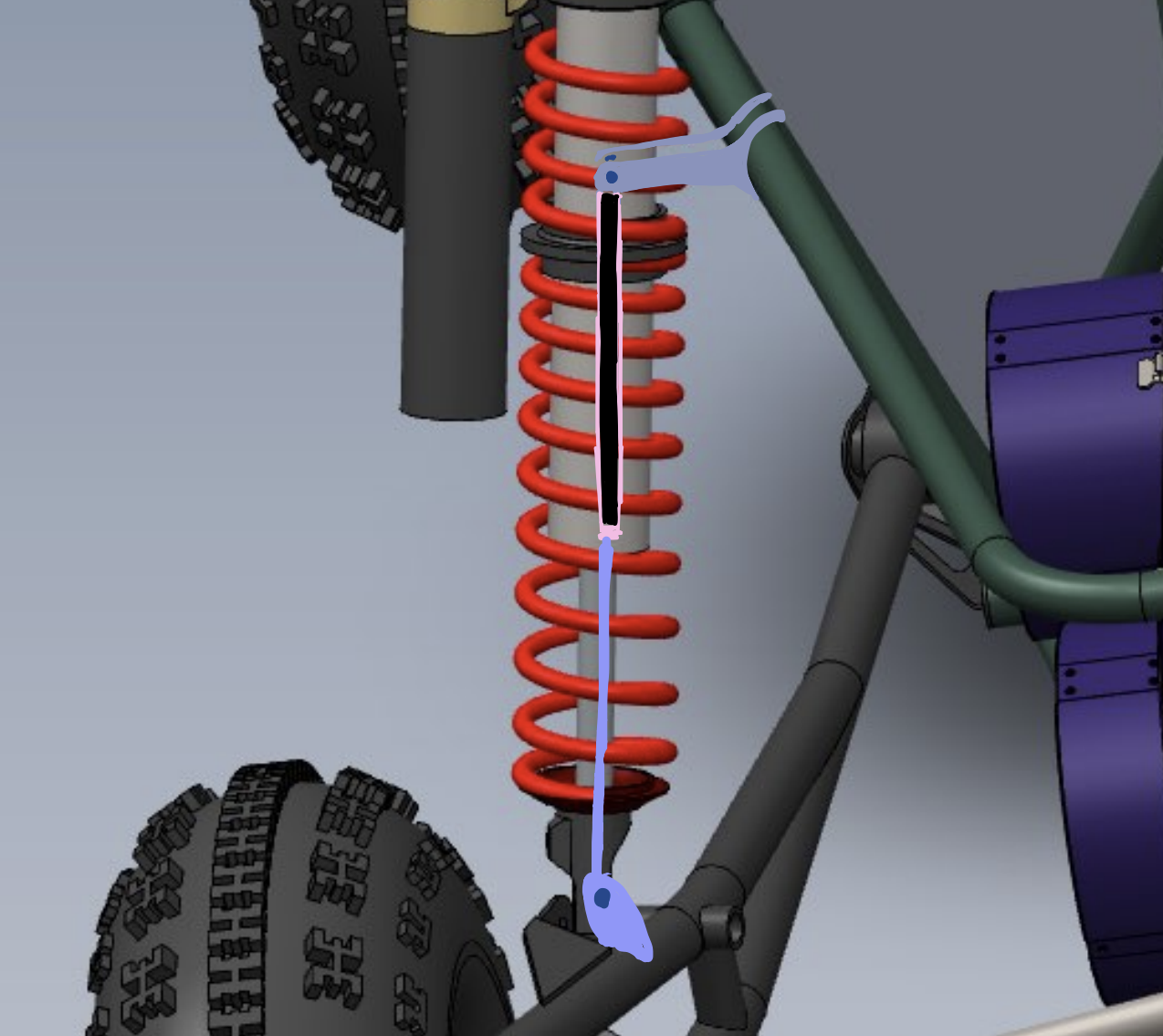
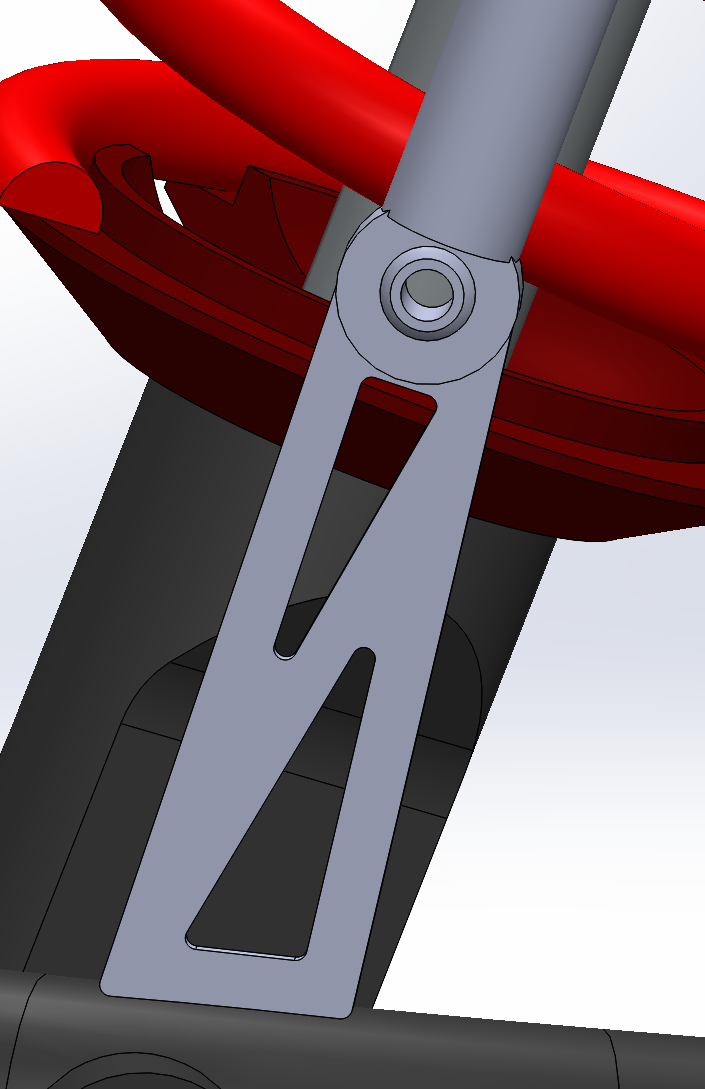
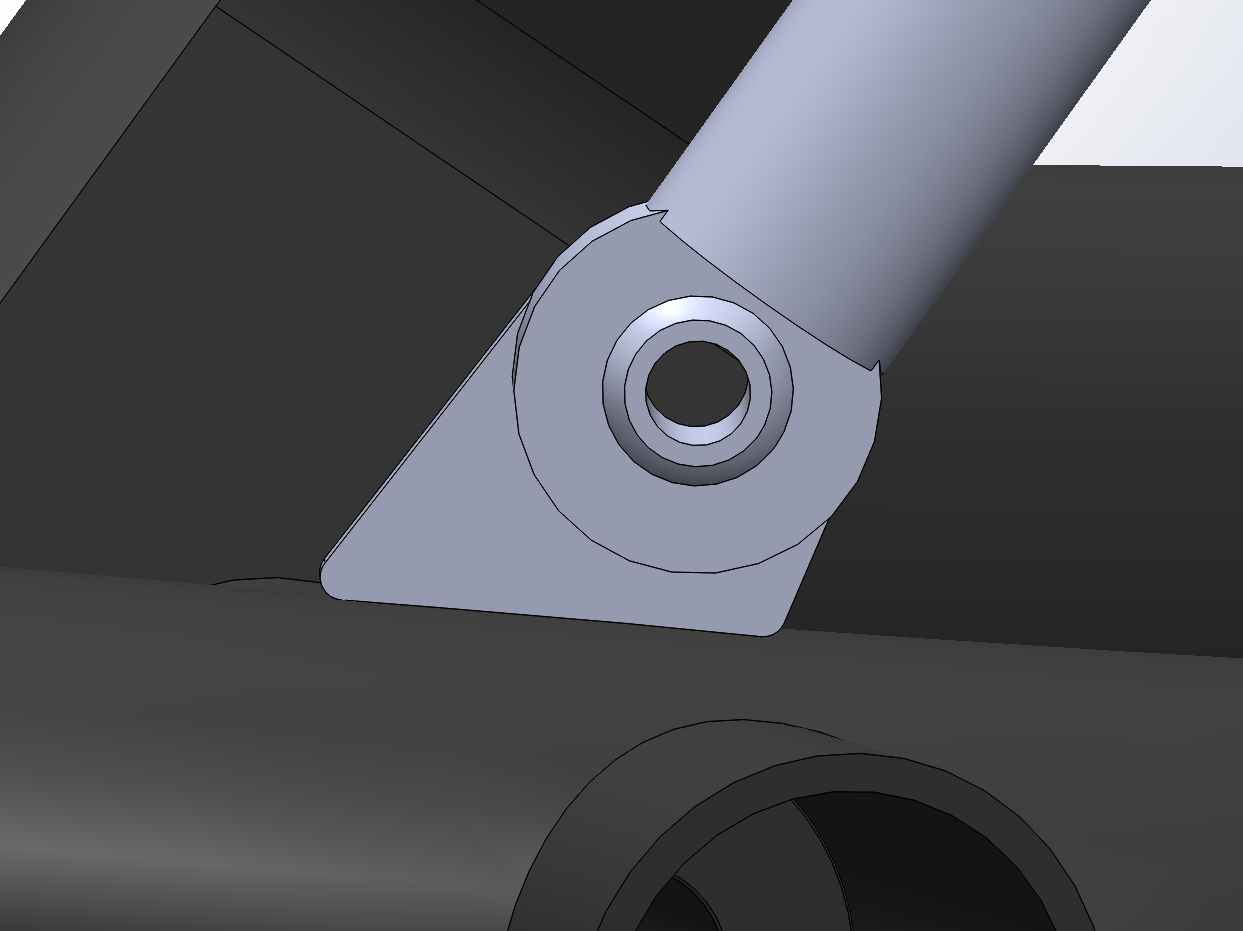
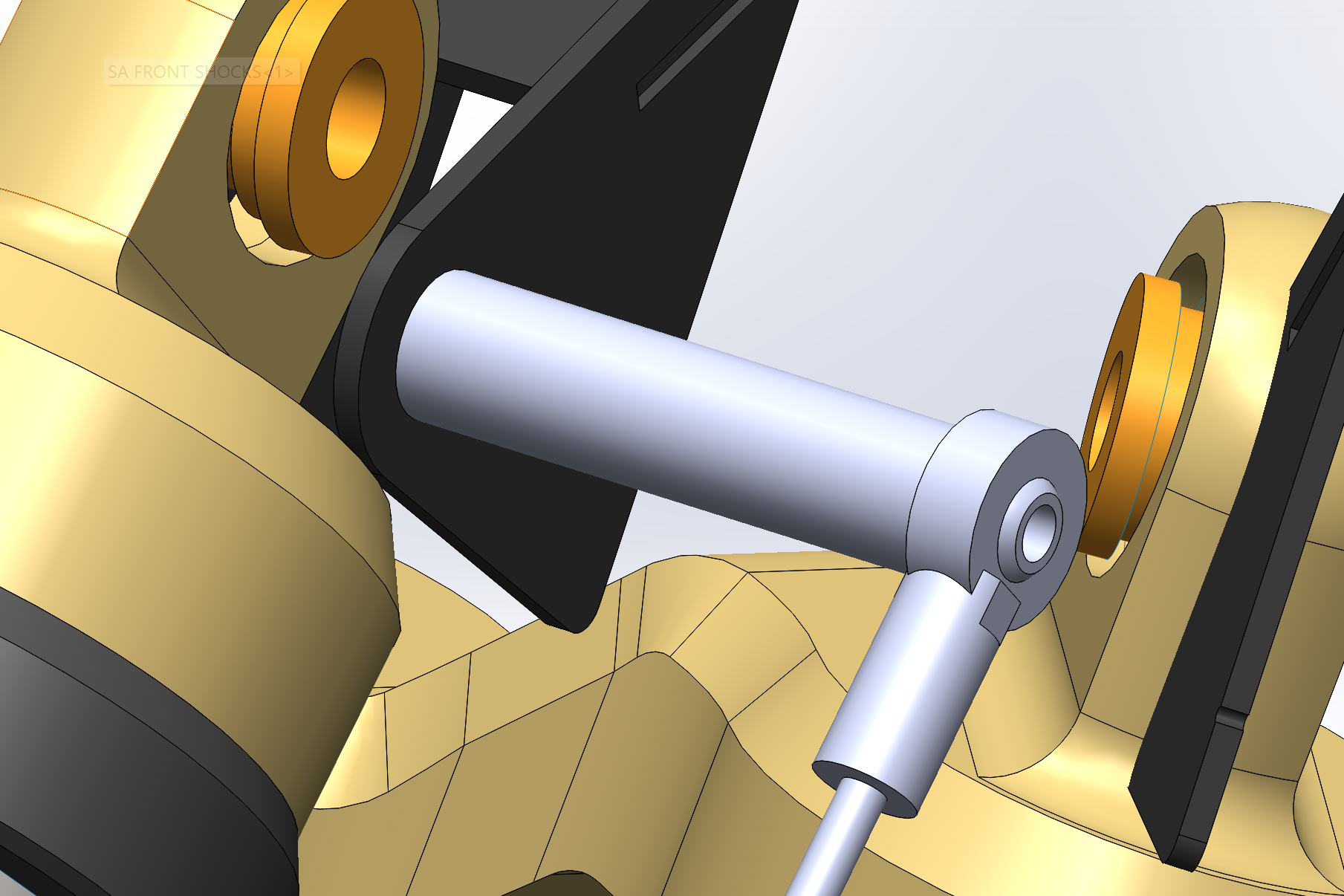
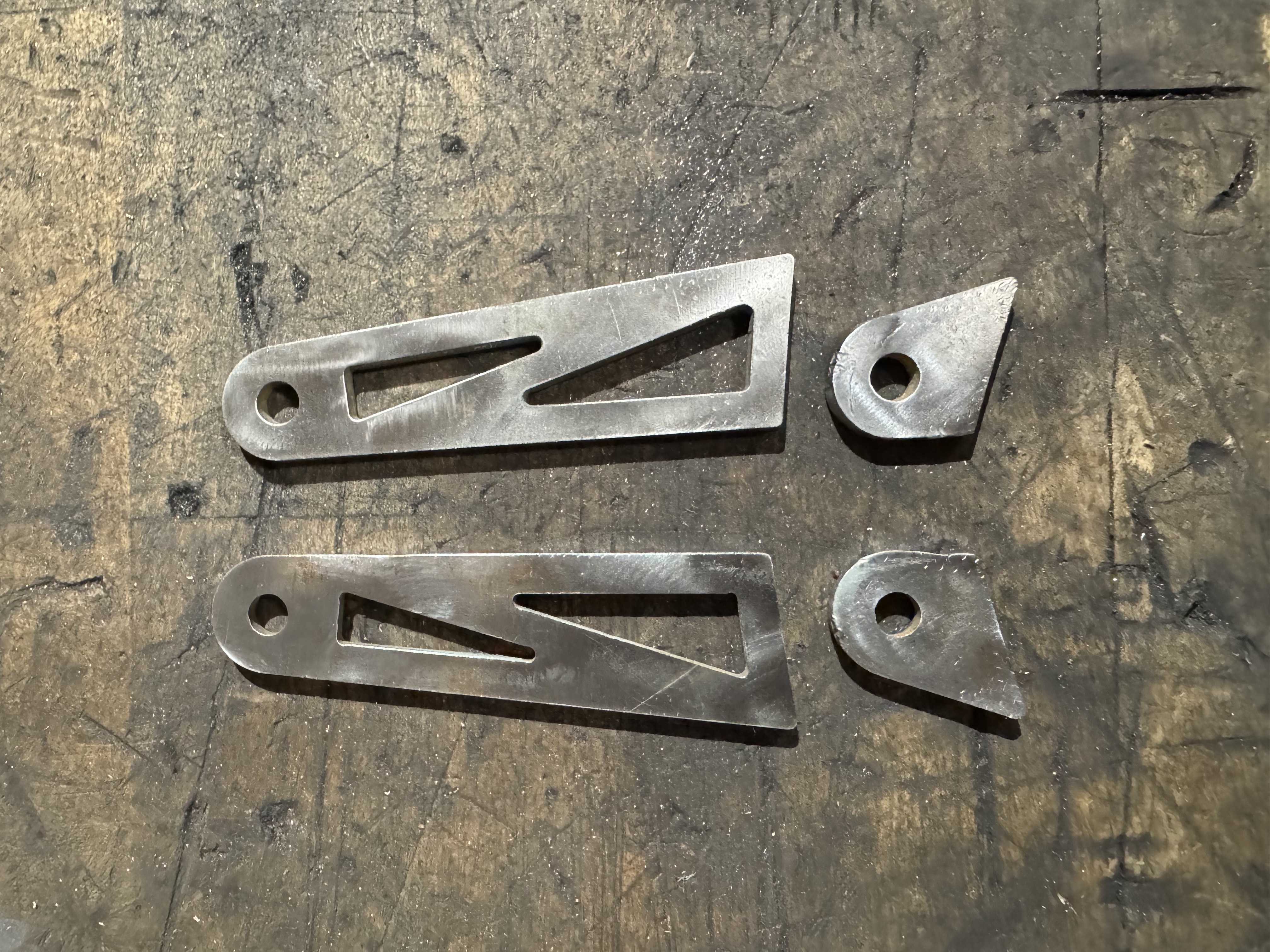
Designed waterjet-cut aluminum mounting brackets tailored to the suspension geometry. Incorporated rigid mounting features to maintain potentiometer alignment during dynamic motion and optimized the design for in-house fabrication, drilling, and tapping.
Waterjet cut brackets in-house for the bottom tabs. For the top mounts, we used roundstock with drilled and tapped holes which were then welded onto the main shock bolt. Manufactured in house, then installed and aligned potentiometers on the vehicle suspension.
Successfully enabled collection of shock travel data through CAN for data acquisition. Improved suspension tuning capability and data reliability during testing and provided a durable, serviceable mounting solution for repeated off-road use.
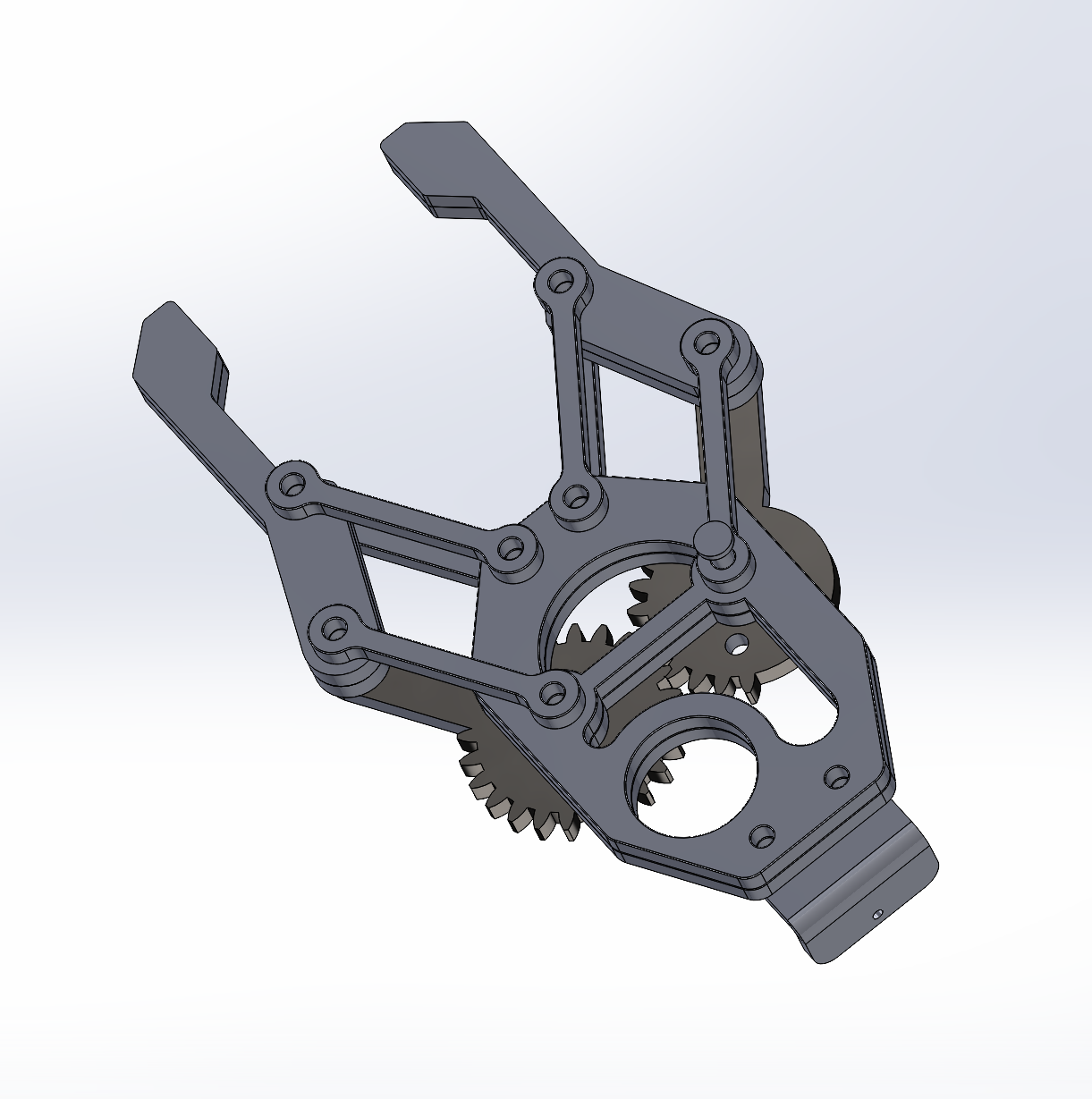
Designed a modular linear gripper in SolidWorks for a chemistry automation robot at the PRIME Robotics Lab (under Dr. Chao Liu). Intended to handle laboratory tools such as test tubes and scoopulas with controlled, repeatable motion. CAD model developed for rapid 3D-printed prototyping, with a planned transition to a machined version for long-term use.
Automated chemistry experiments require precise handling of small, fragile, and varied lab tools. Off-the-shelf grippers lacked the adaptability and form factor required for test tubes and scoopulas. The research platform required a compact, modular end-effector suitable for iterative experimentation.
Designed a parallel-jaw linear gripper optimized for consistent, repeatable motion. Shaped jaw geometry to support rubber grip pads, improving friction and compliance when handling delicate tools. Structured the design to allow quick iteration during 3D-printed prototyping before transitioning to a machined version.
Initial prototype to be fabricated using 3D printing for rapid testing and iteration. Final version to be machined for improved durability, precision, and repeatability. Design allows for jaw replacement or modification to support additional lab tools.
Delivered a functional gripper design ready for prototyping and experimental integration. Enables the chemistry automation platform to manipulate test tubes and scoopulas reliably and contributes a reusable, modular end-effector to ongoing research in robotic manipulation and lab automation.
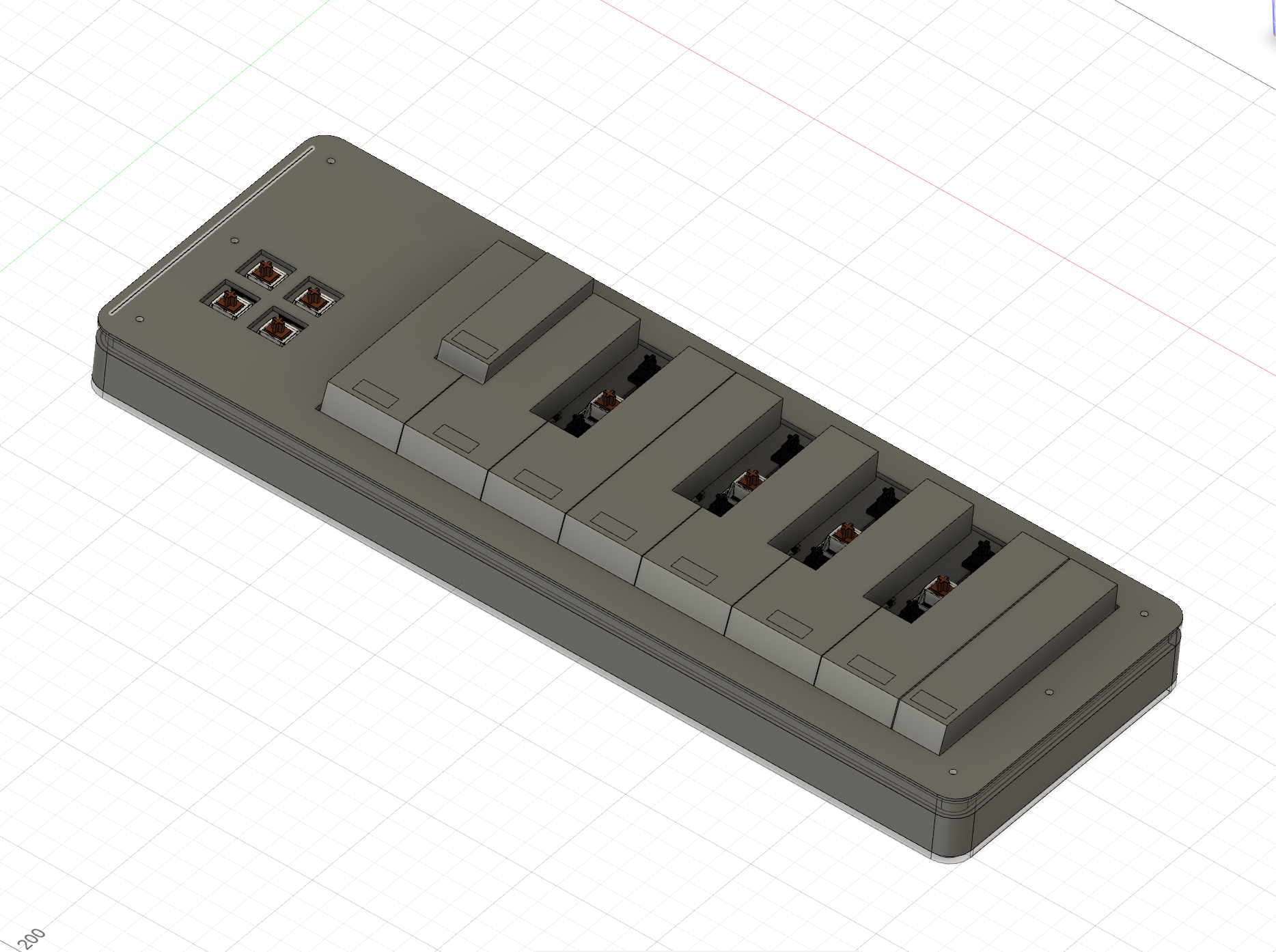
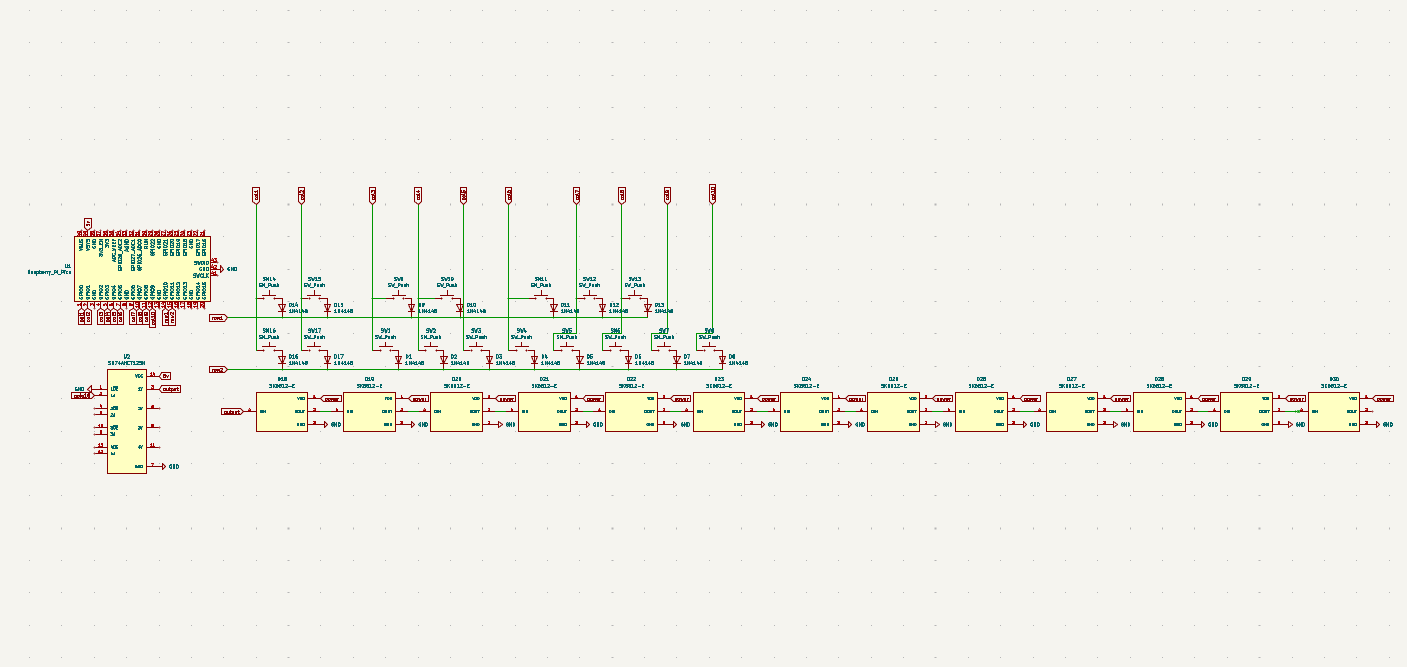
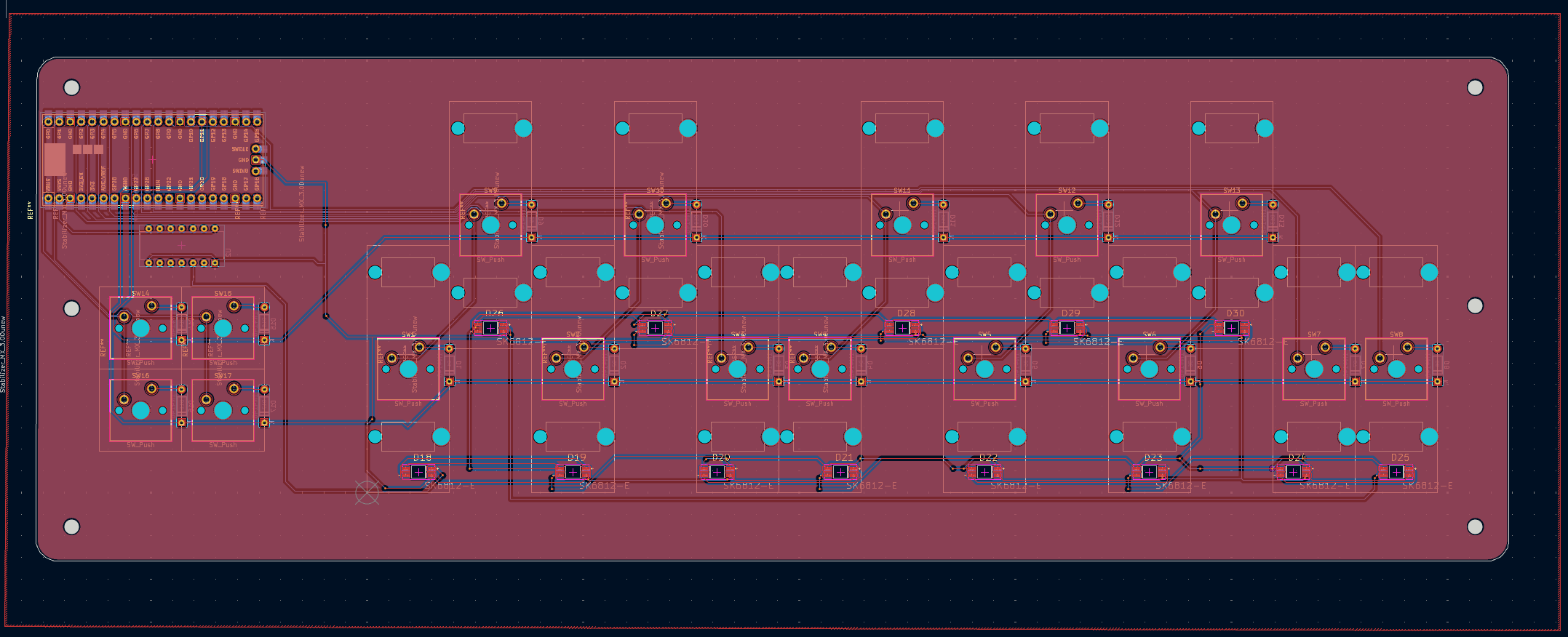
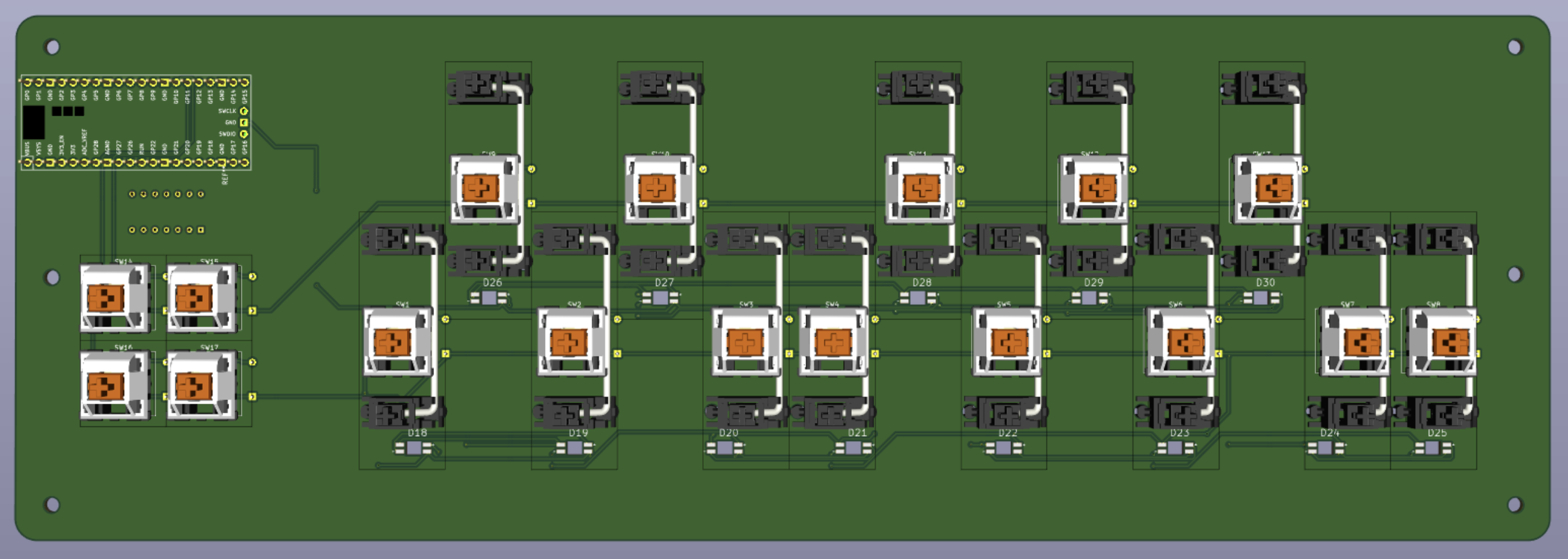
Designed an accessible MIDI keyboard system aimed at teens (up to age 16), focusing on clarity, customization, and ease of use. Integrated mechanical enclosure design, custom PCB design, and early-stage software development — the first end-to-end project combining CAD, electronics, and app design into a single system.
Many entry-level MIDI controllers are not designed with accessibility or sensory sensitivity in mind. Young users and neurodivergent learners often benefit from simplified interfaces and customizable interaction. Creating an accessible learning tool requires coordination between physical hardware and software.
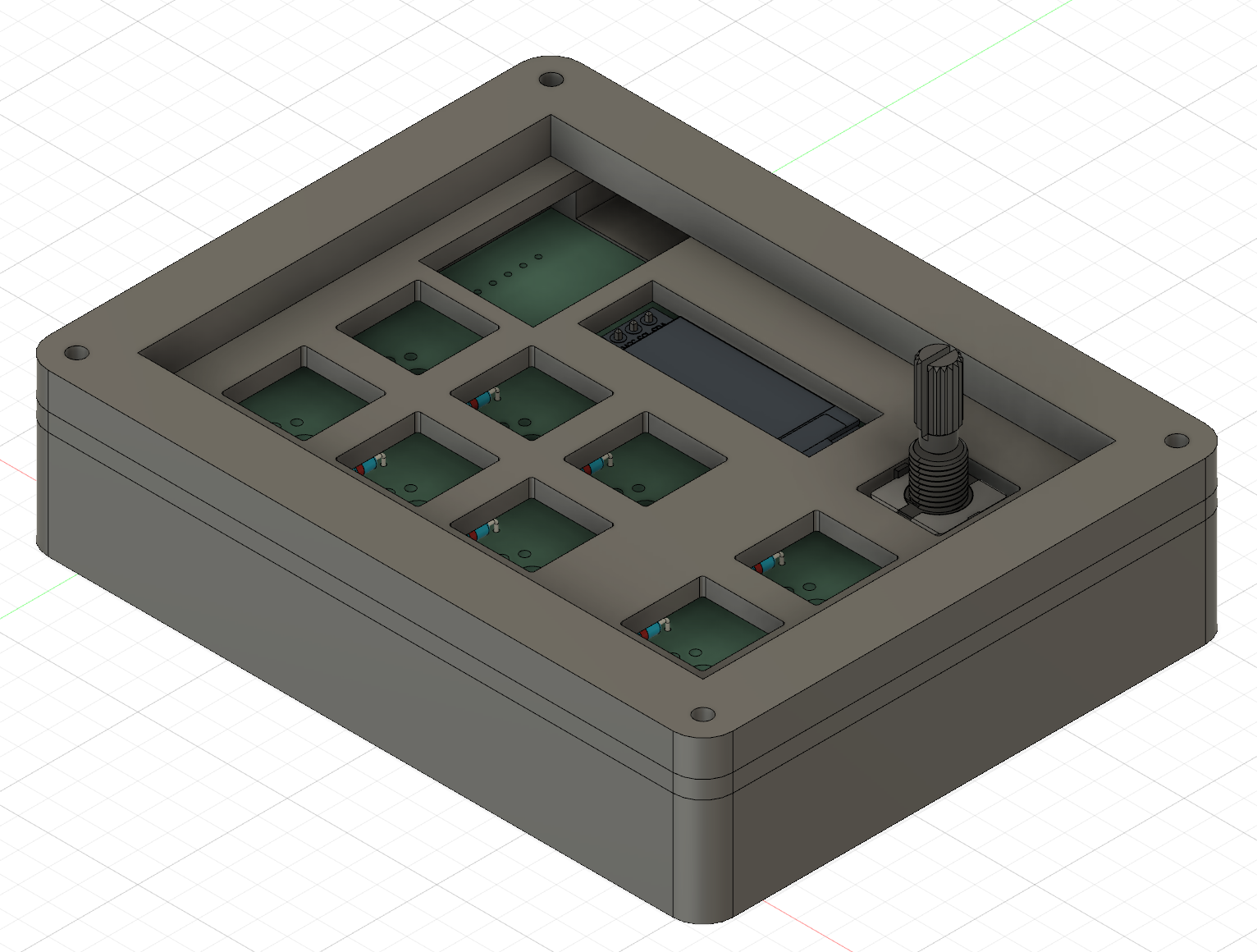
Modeled a compact enclosure to house the PCB, keys, wiring, and Raspberry Pi Pico. Designed for easy assembly and iteration as electronics and firmware evolve, balancing durability, accessibility, and visual clarity.
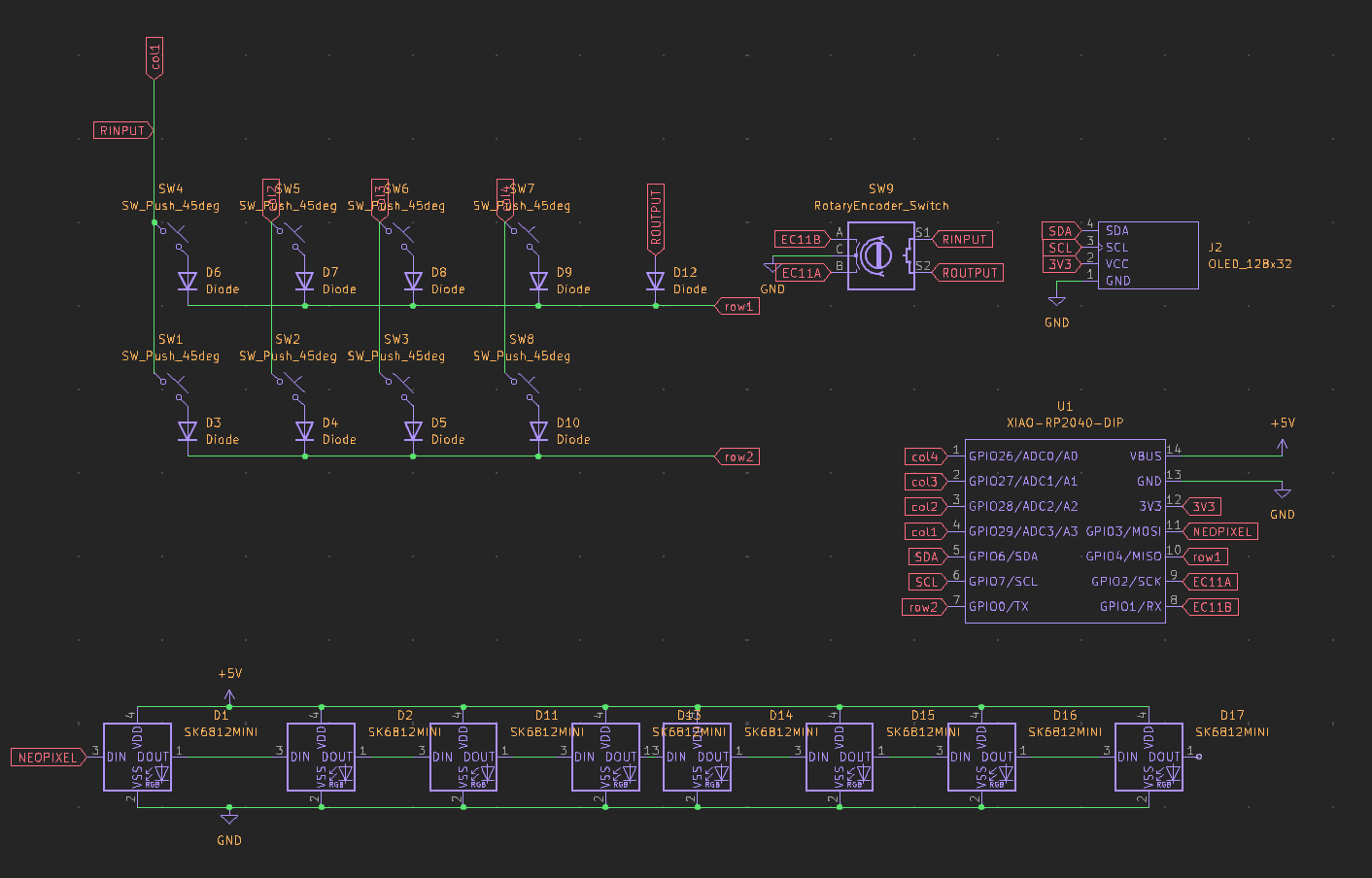
Designed a custom PCB in KiCad integrating a Raspberry Pi Pico for MIDI functionality. Iterated PCB layout in parallel with enclosure design to ensure fit and cable routing, focusing on clean power distribution, input reliability, and future expandability.
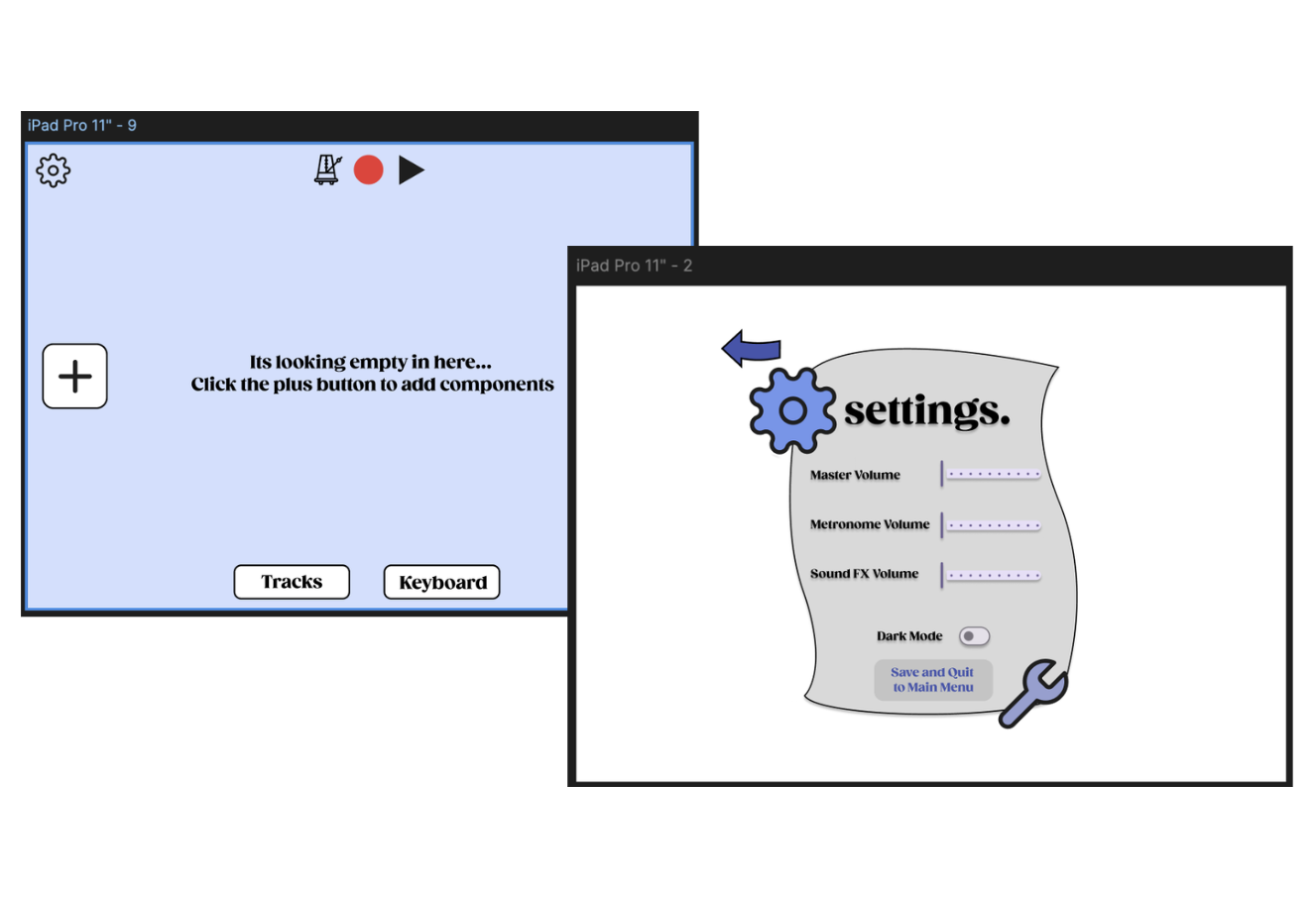
Designed the companion app's interaction flow and UI in Figma with simple, readable layouts and customizable controls; began translating the design into a Swift-based iOS app with accessibility-aware features.
Enclosure CAD completed and ready for fabrication. PCB design completed and prepared for prototyping. App design finalized in Figma; early Swift development underway. Project remains in active iteration as a work-in-progress.
Established a functional, system-level prototype design spanning hardware and software. Developed hands-on experience integrating mechanical, electrical, and UI design, creating a foundation for an accessible music-learning tool for teens.
Hardware, enclosure, and software must be designed together to avoid costly rework. Early prototyping and iteration are essential when designing for real users. Accessibility considerations influence mechanical layout as much as software UI.
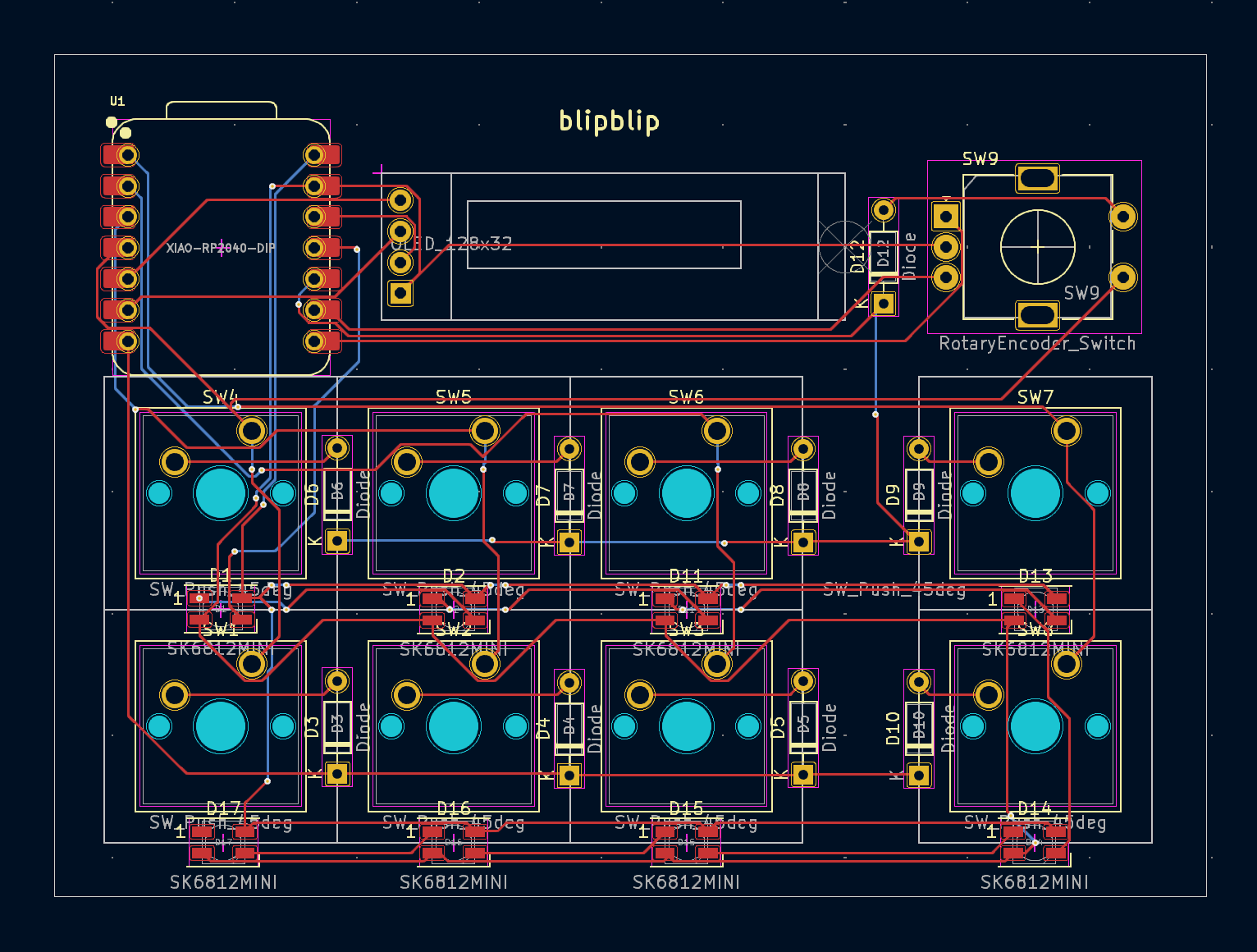
Designed and built a custom 8-key macro pad to automate and streamline productivity workflows. Integrated mechanical design, custom PCB, RGB lighting, OLED feedback, and firmware into a compact device. Designed for 3D printing and rapid iteration, with an emphasis on customization and usability.
Many workflows rely on repetitive keyboard shortcuts and application-specific commands. Off-the-shelf macro pads often lack flexibility, visual feedback, or compact form factors. The goal was to design a programmable input device tailored to individual workflows and preferences.
Designed a compact enclosure optimized for 3D printing, selected Cherry MX mechanical switches for durability and tactile feedback, and optimized layout for key spacing, encoder access, and OLED visibility.
Designed a custom PCB around a Seeed XIAO RP2040 microcontroller. Integrated 8 Cherry MX switches, a rotary encoder, 8 SK6812 LEDs, and an OLED display, routing the board with assembly and signal integrity in mind.
Implemented custom KMK firmware to support key mapping, encoder behavior, lighting effects, and display output. Programmed macros to automate common productivity tasks and enabled firmware-level customization for different workflows.
PCB fabricated and assembled. Enclosure 3D-printed for rapid iteration. Firmware flashed, tested, and refined on physical hardware.
Delivered a fully functional, customizable macro pad that improved efficiency by reducing repetitive keyboard actions and provided hands-on experience integrating embedded firmware with custom hardware.
Input device usability depends heavily on switch choice and encoder placement. Firmware design directly shapes the user experience. Tight iteration between PCB layout, enclosure design, and firmware accelerates development.
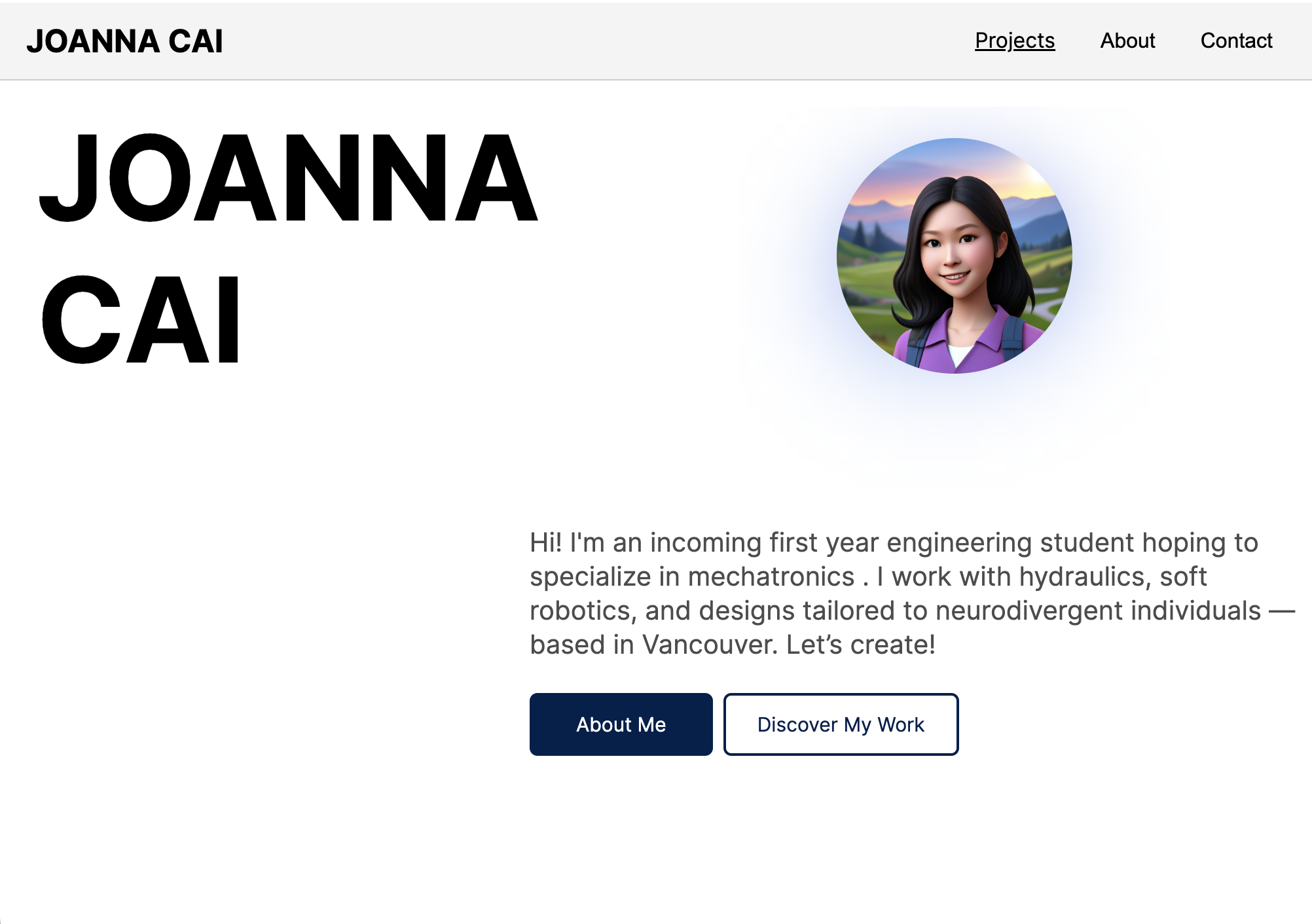
A concise site to showcase my projects and share a little bit about me.
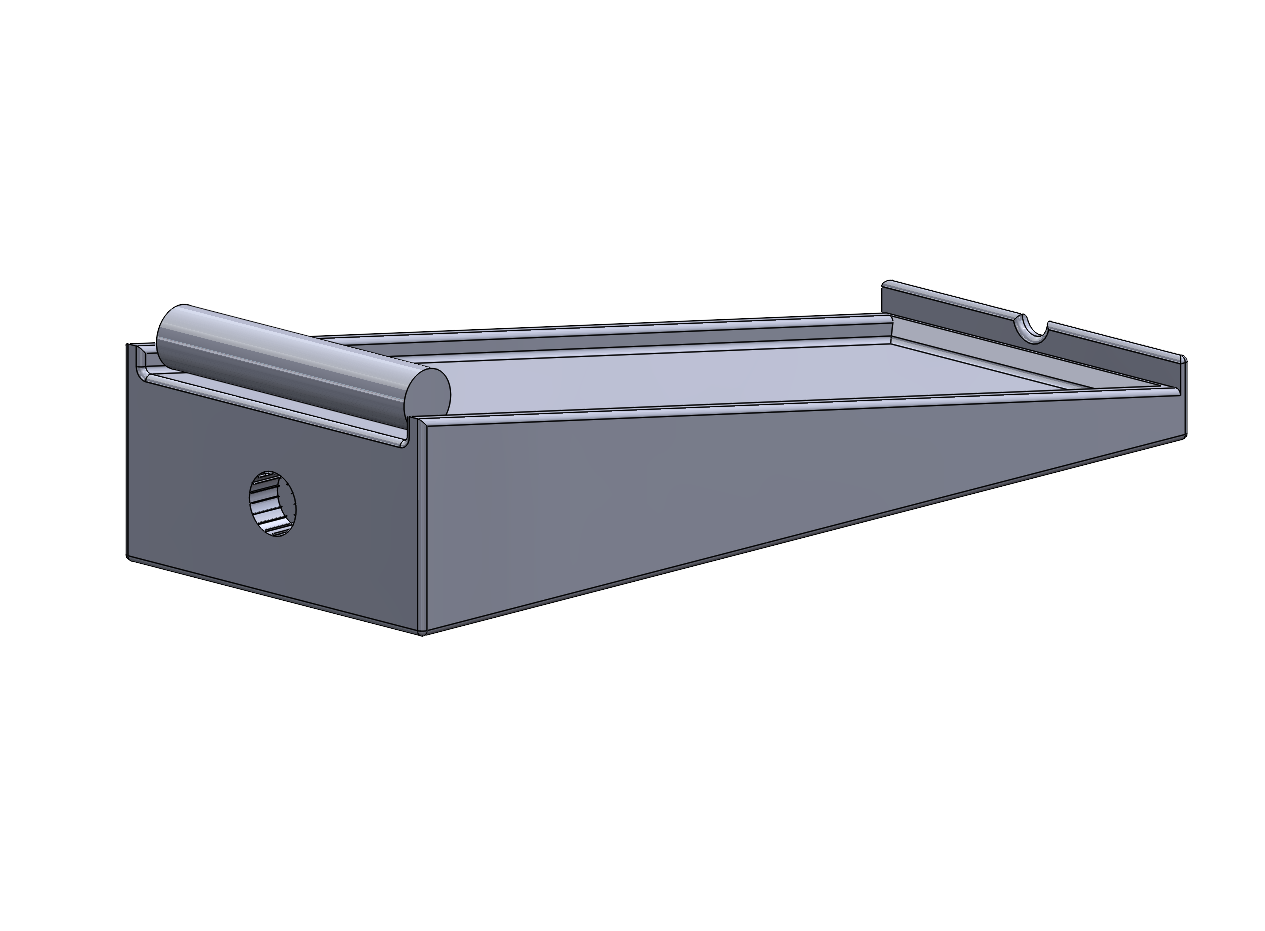
Designed a CAD model of an accessible toothpaste dispenser for users with limited finger and wrist mobility. Focused on one-handed operation and reduced grip strength requirements using a rolling/levered mechanism.